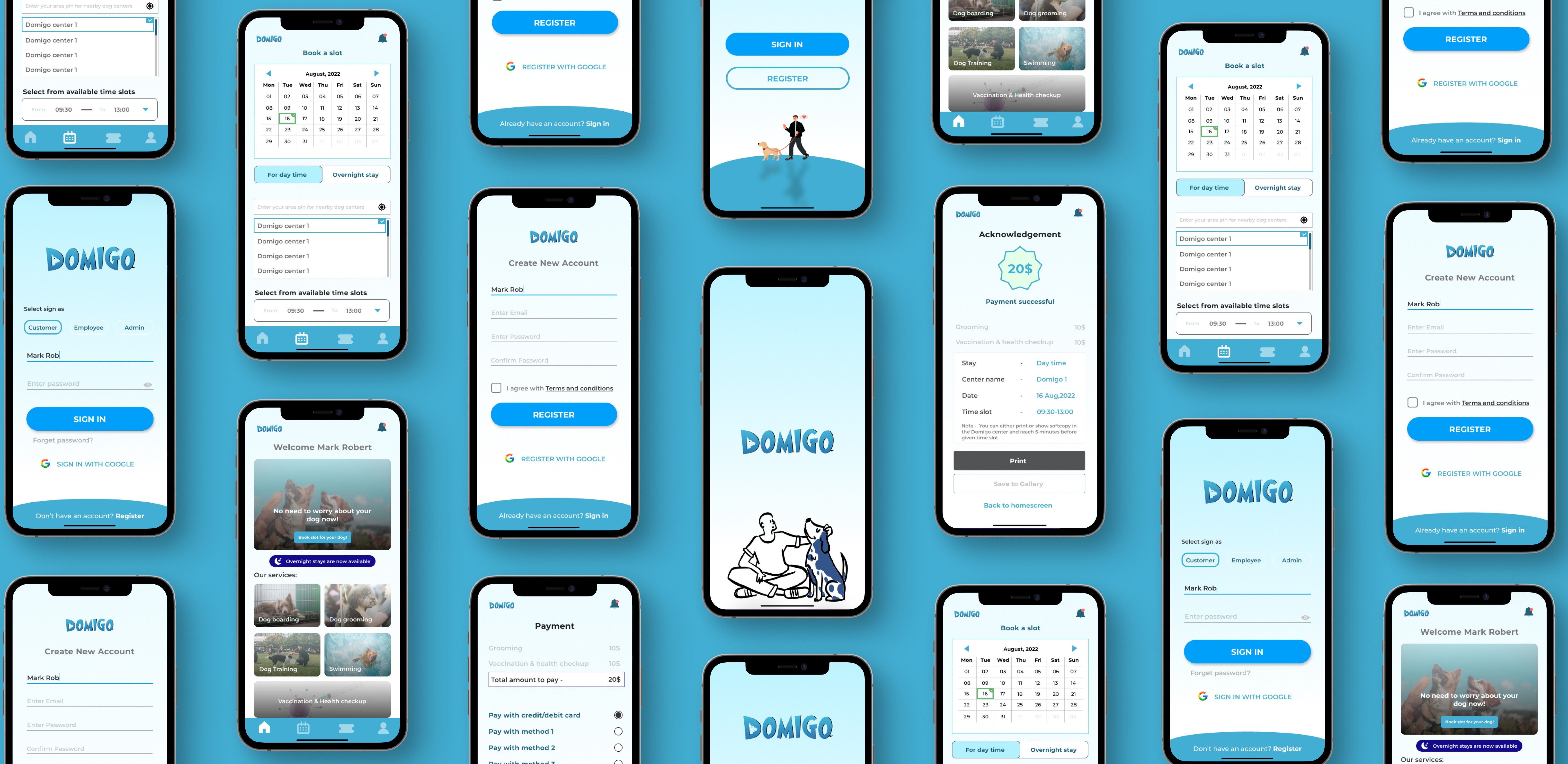
Domigo – Everything Your Dog Needs
A digital companion for pet owners to book services, order food, and manage all pet care in one place.
MY ROLE :
UX Designer
TIMELINE :
2024 (Oct-Dec)
TOOLS
Hotjar
Notion
Figma
Google meet
DISCIPLINE
Interaction Design
Usability Testing
Heuristic Evaluation
Visual Design
◆ Table of Contents
Caring for Pets in the Modern Age
Defining the Problem
Understanding the User
Designing with Trust & Convenience
Prototype & Testing
Edge Cases & Solutions
Future Plans and Learnings
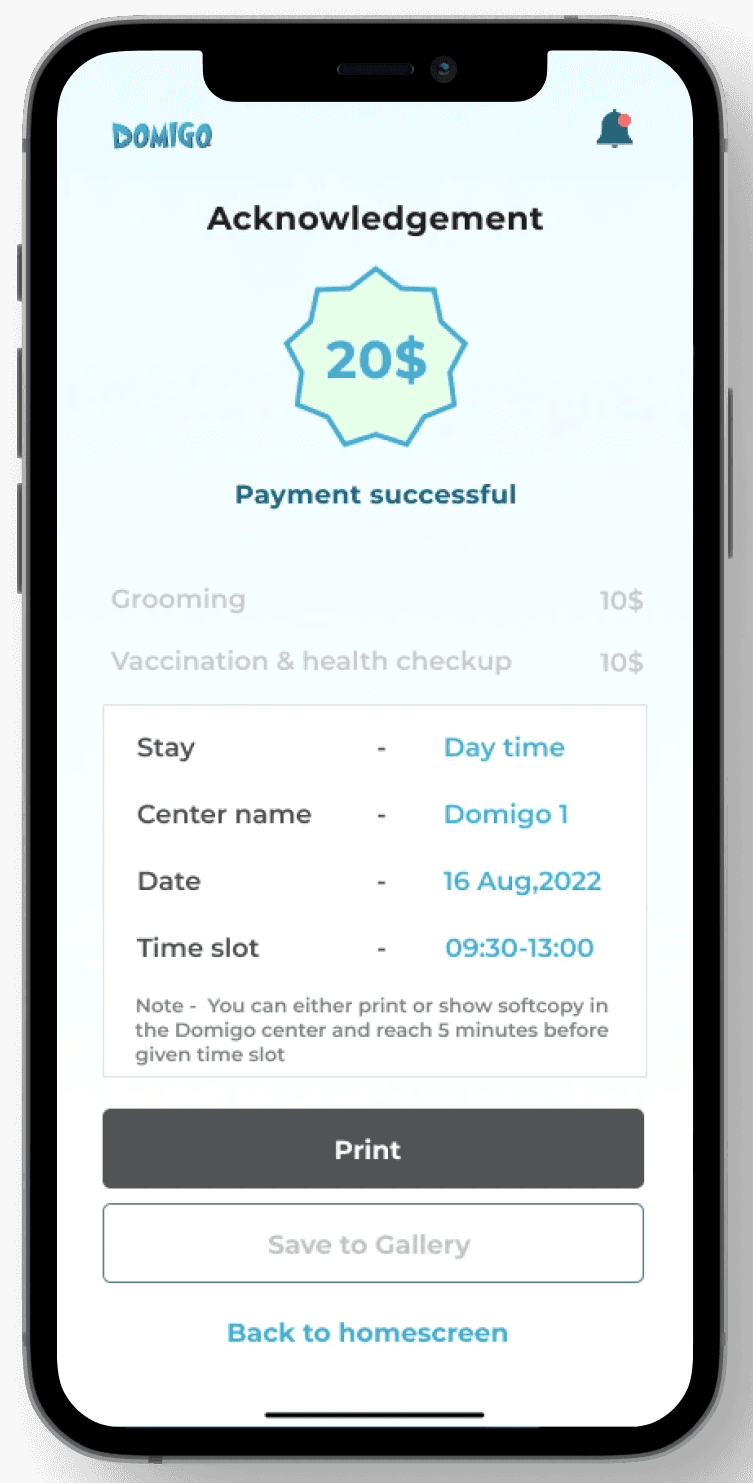
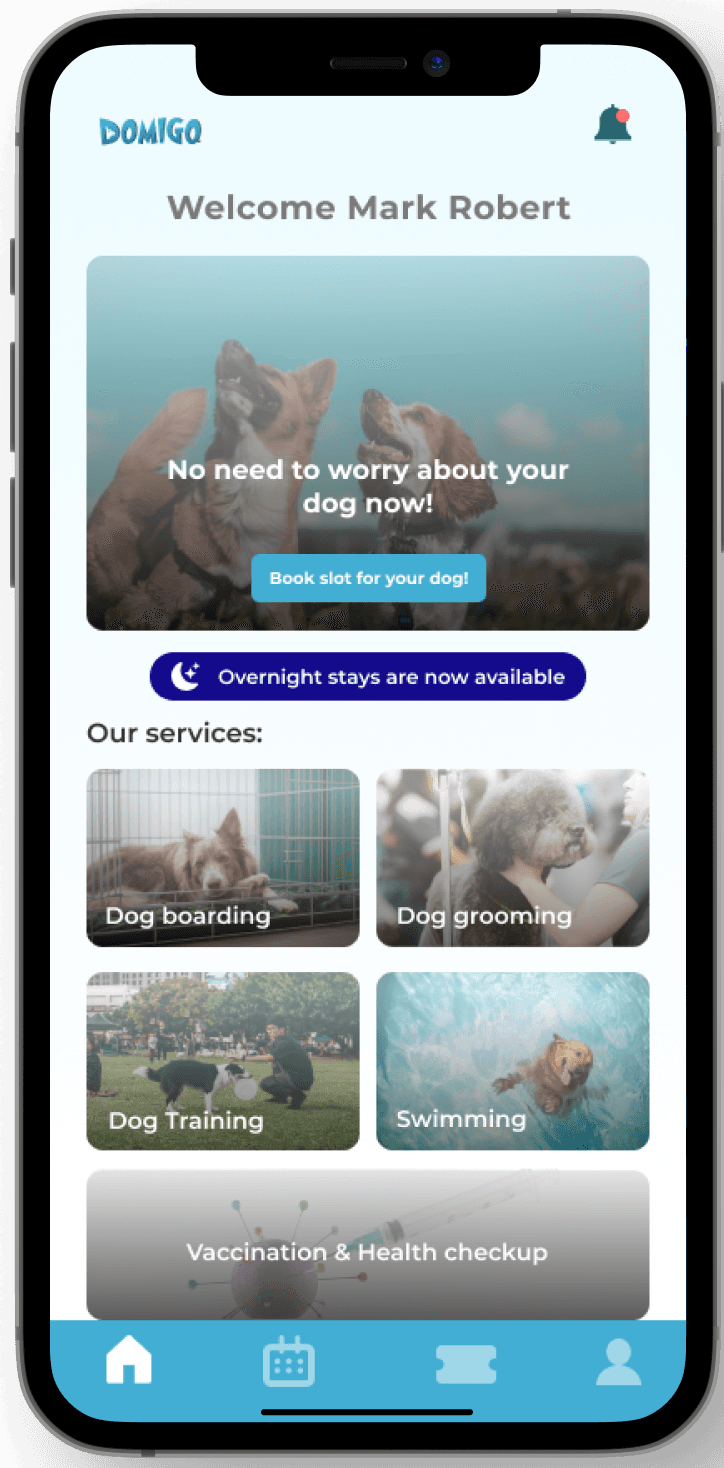
Pet owners today juggle work, home, and the demands of caring for their dogs and other pets, often struggling to manage grooming, training, and health reminders scattered across different services.
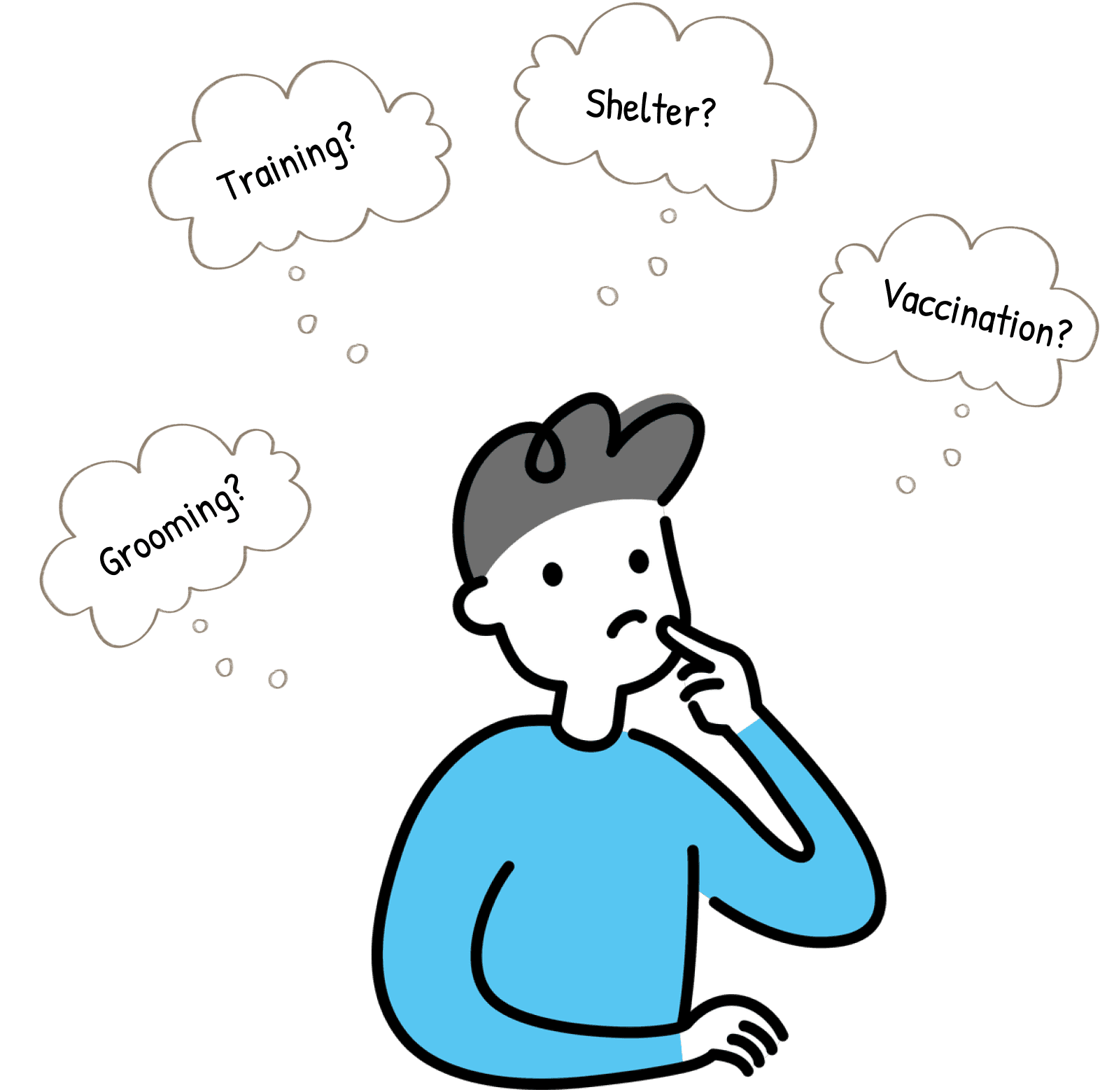
How might we create a seamless, trustworthy experience that centralizes pet care, reduces stress, and supports both dog-focused needs and the wider pet community?
◆ The Challenge
Pet owners face fragmented experiences when managing grooming, training, vaccination, shelter, and food needs across multiple apps and service providers. This lack of centralization leads to:
Missed appointments and disorganized schedules
Difficulty trusting service providers
Inconsistent design and experience across platforms
Core Problem:
There’s no unified digital platform that simplifies end-to-end pet care management while ensuring convenience, transparency, and personalized support.
◆ Understanding Pet Care in a Fragmented Digital World
Survey (n=42): Online survey to validate interview findings.
Respondents: 71% dog owners, 19% multi-pet households, 10% cats/small pets only.
Top needs: 78% transparent pricing, 74% verified providers, 69% tired of multiple apps, 66% automatic grooming/vaccine reminders, 61% quick emergency help, 58% managing multiple pets or recurring services.
User Interviews (10 Users): Semi-structured interviews with pet owners (ages 23–45).
6 dog owners
2 first-time pet parents
2 multi-pet households
Focused on booking services, tools used, trust in providers, tracking care (vaccines/grooming/food), and emergency/last-minute pain points.
Card Sorts & Affinity Mapping
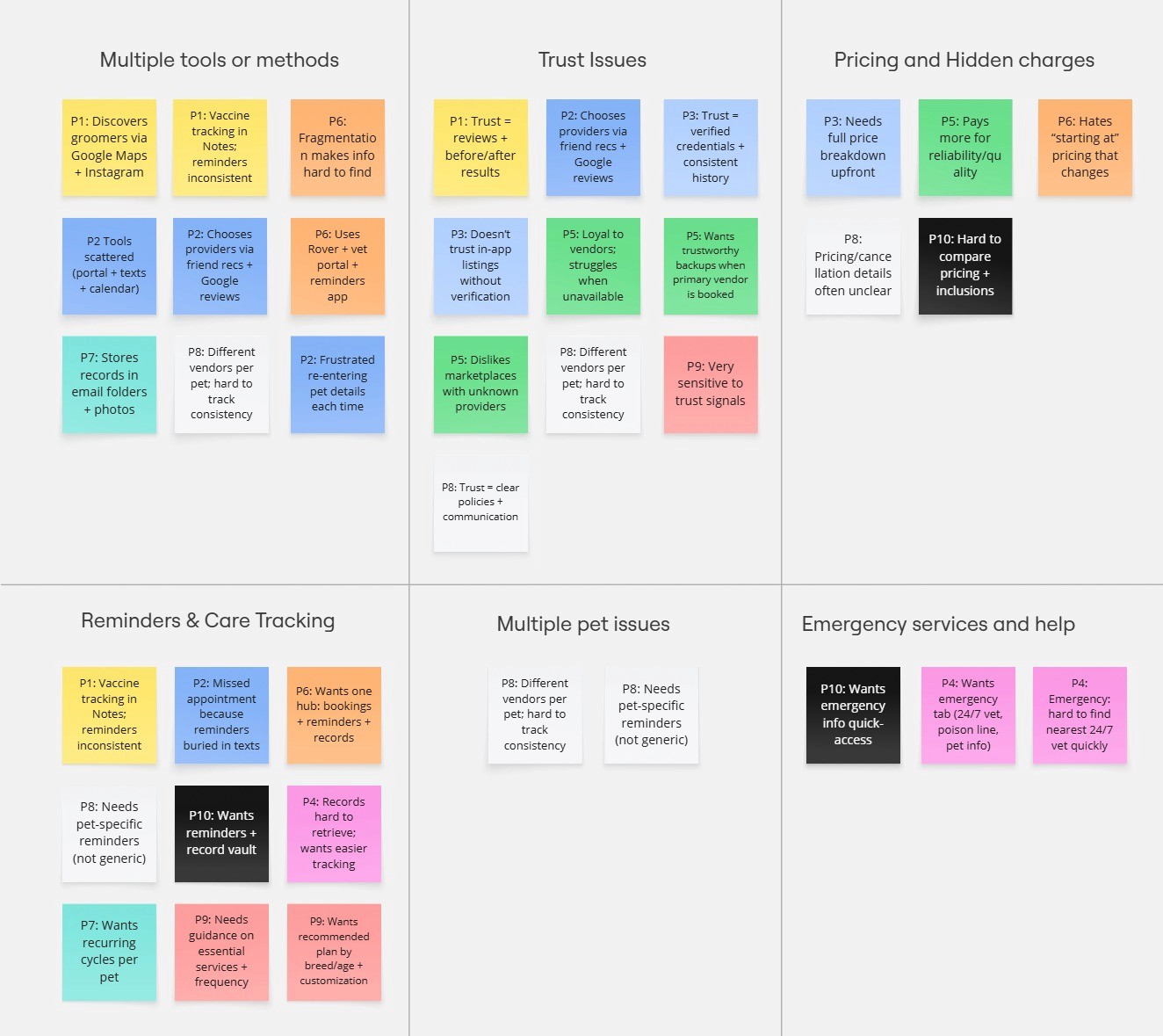
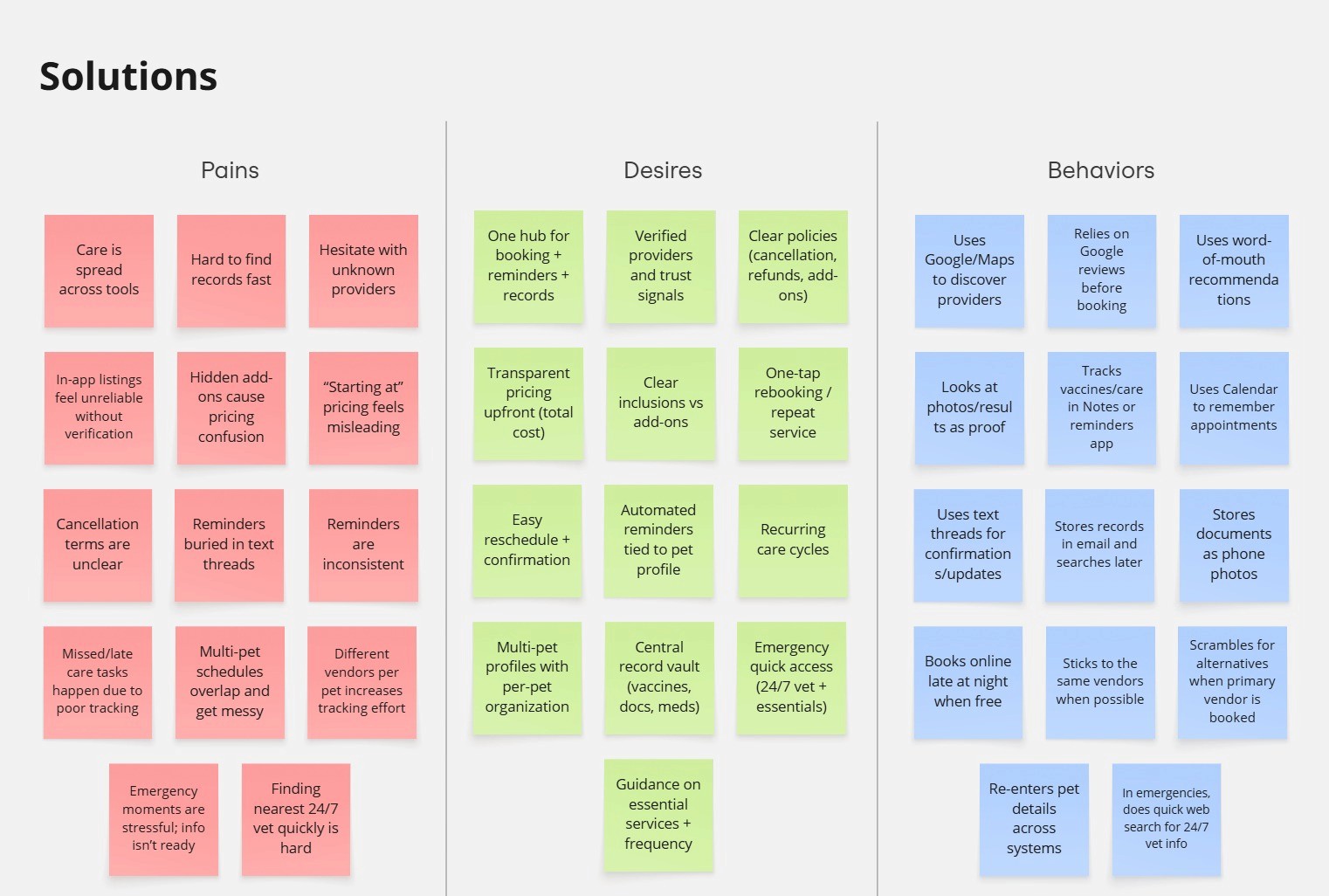
Personas and Journey Map

Based on patterns identified across user interviews, affinity mapping, and card-sorting analysis, I developed these three personas to represent key pet-owner archetypes.
After synthesizing insights from 10 user interviews and three personas, I found that the core pet-care journey remained largely consistent across user types from discovering services, booking, managing reminders, to post-service follow-up
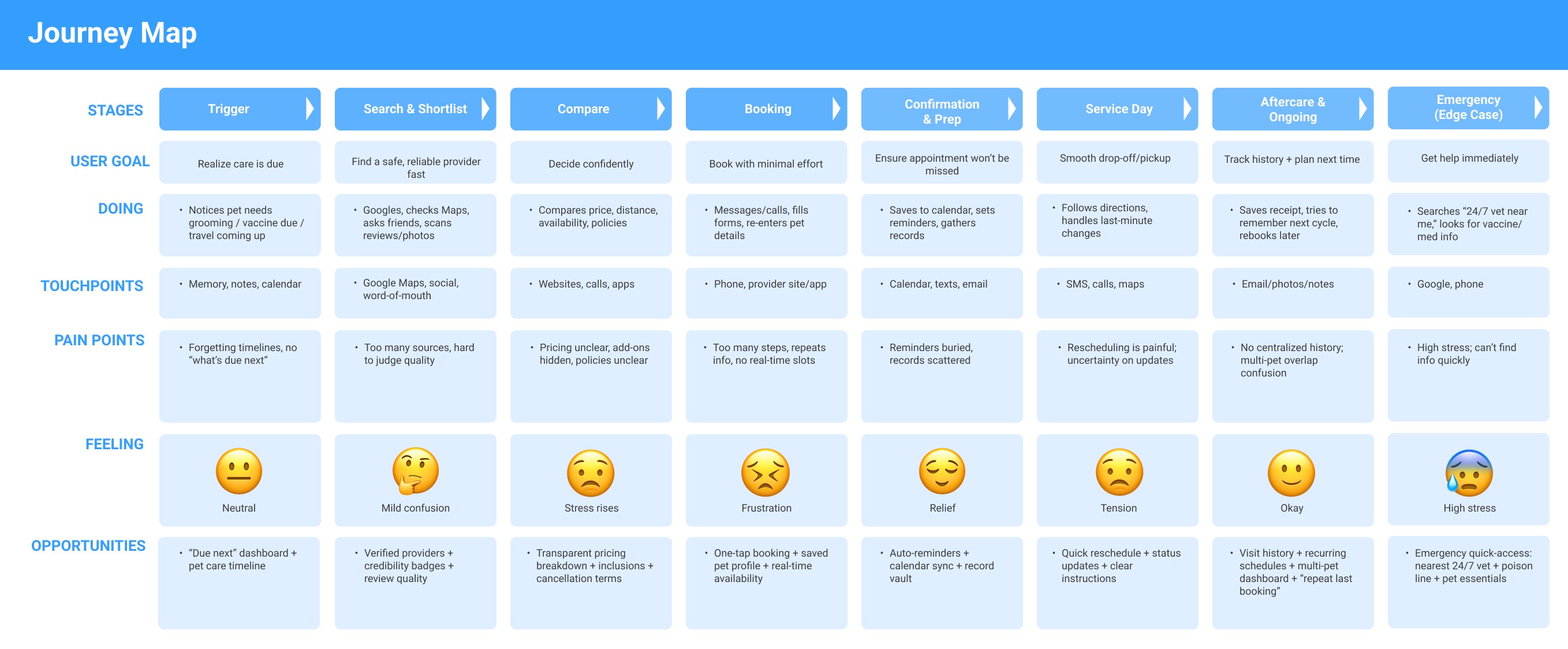
To avoid redundancy and focus on decision-making moments, I created one primary journey map that represents the shared experience. Persona-specific needs diverged mainly in expectations, priorities, and edge cases, rather than in entirely separate flows.
Persona Divergence
P1 - First-time pet parent
Guidance + reassurance
P2 - Busy professional
Speed + efficiency
P3 - Multi-pet family
Coordination
Studied trust-building in service marketplaces, recurring pet-care cycles, and the impact of fragmented tools on follow-through. These insights reinforced the need for a dog-first, pet-inclusive platform with verified providers, clear pricing, and proactive reminders.
Studied trust-building in service marketplaces, recurring pet-care cycles, and the impact of fragmented tools on follow-through. These insights reinforced the need for a dog-first, pet-inclusive platform with verified providers, clear pricing, and proactive reminders.
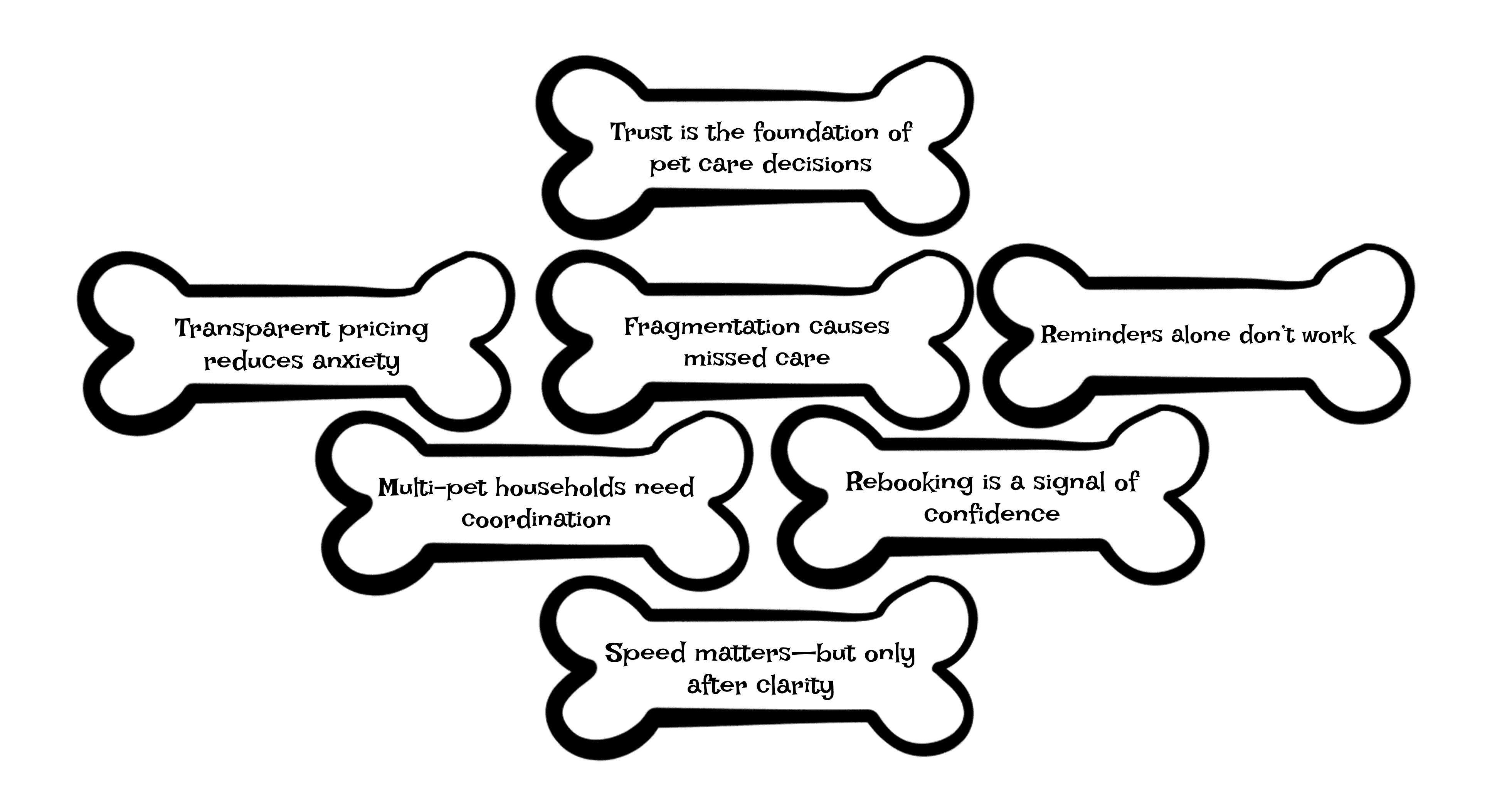
Key Insights from Research & Synthesis
◆ Design for Pet Care
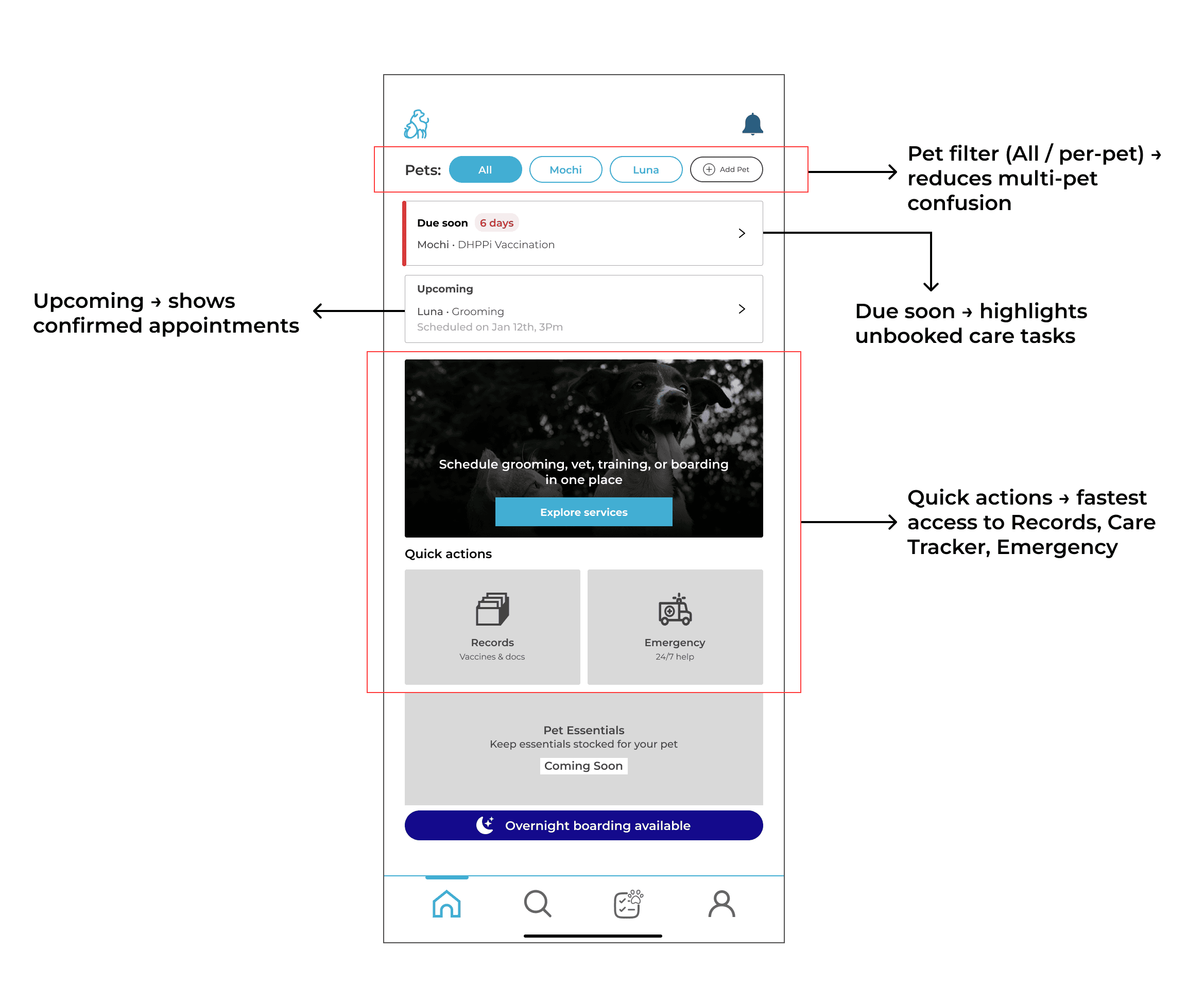
Home Dashboard (Unified Hub)
This screen consolidates booking, reminders, and records into one place. The pet filter (All/Mochi/Luna) supports multi-pet households, while “Due soon” surfaces unbooked care tasks and “Upcoming” confirms scheduled visits. Quick actions provide one-tap access to Records, Care Tracker, and Emergency help.
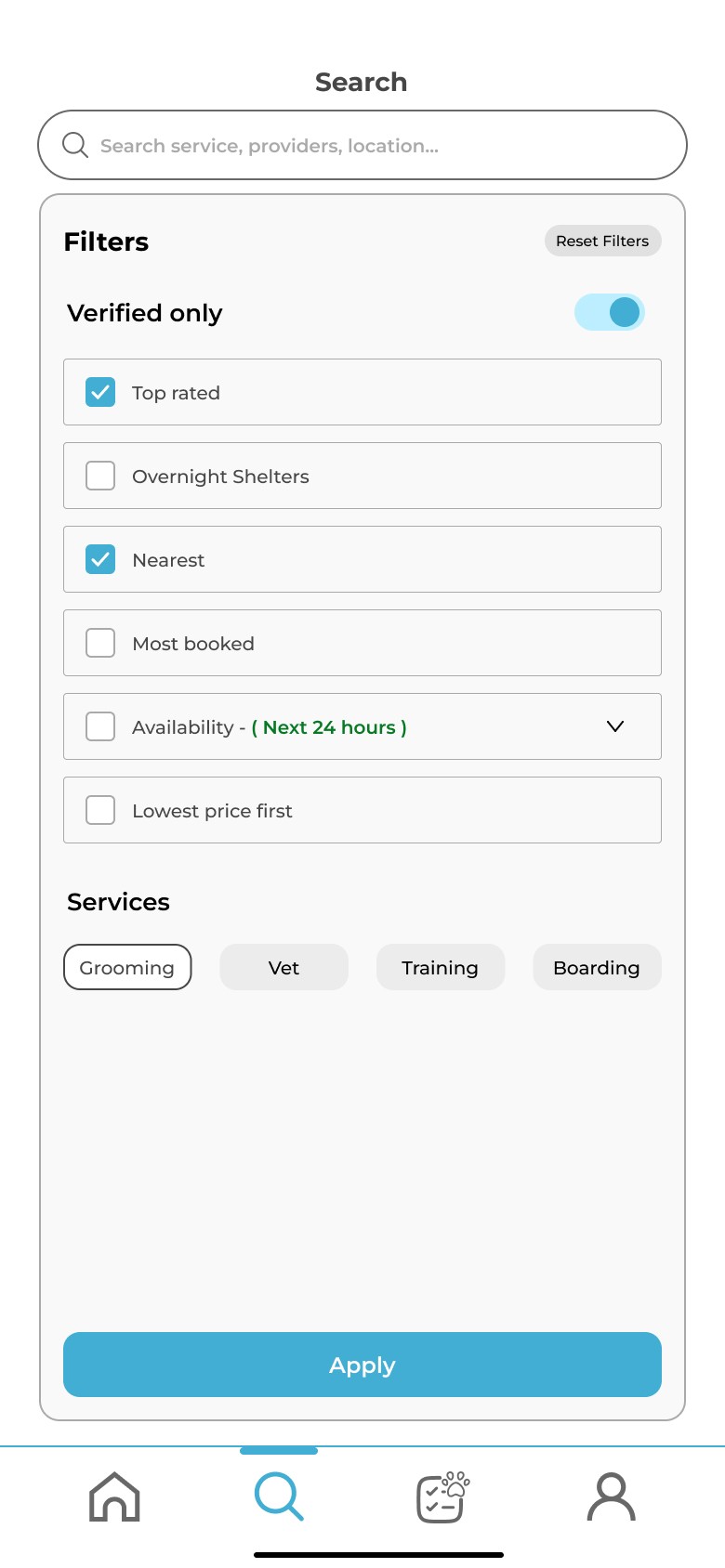
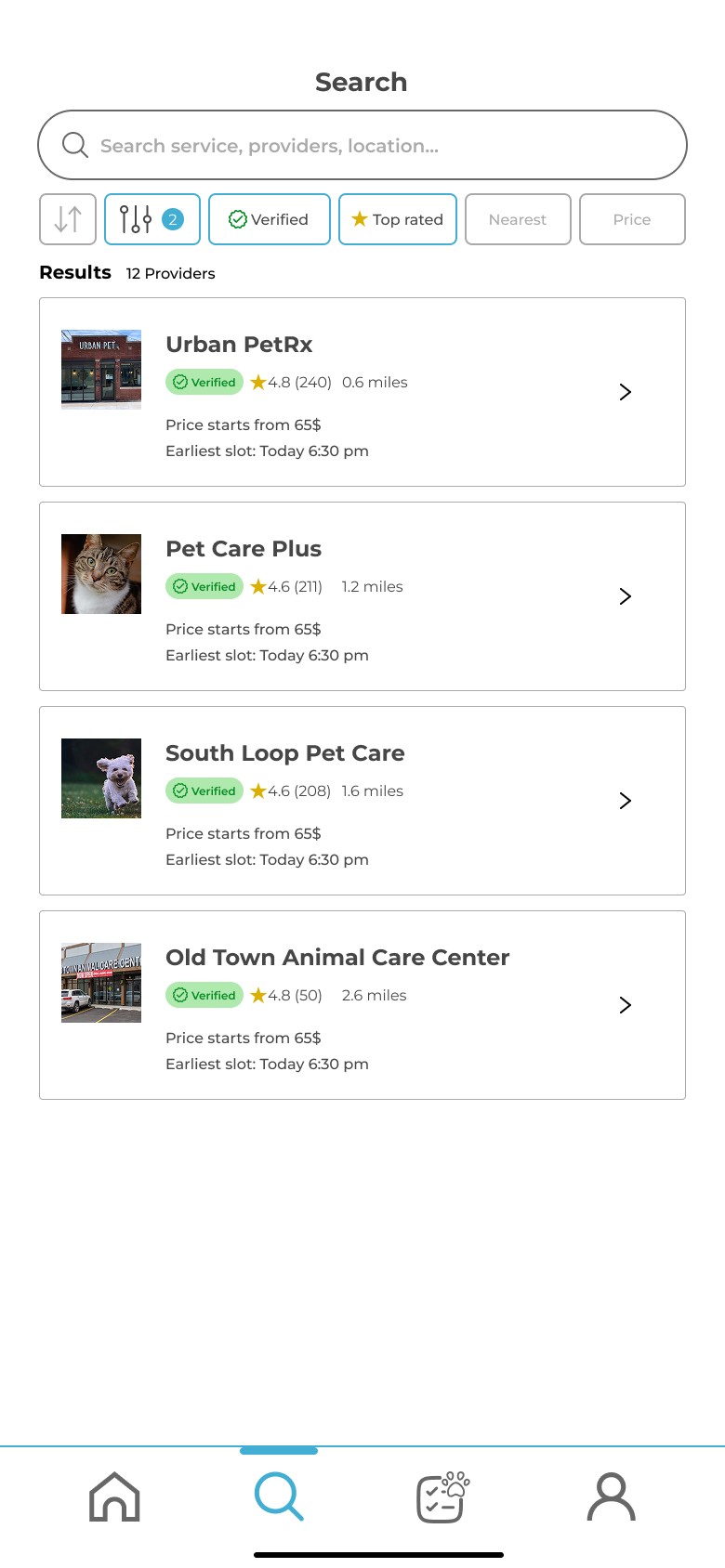
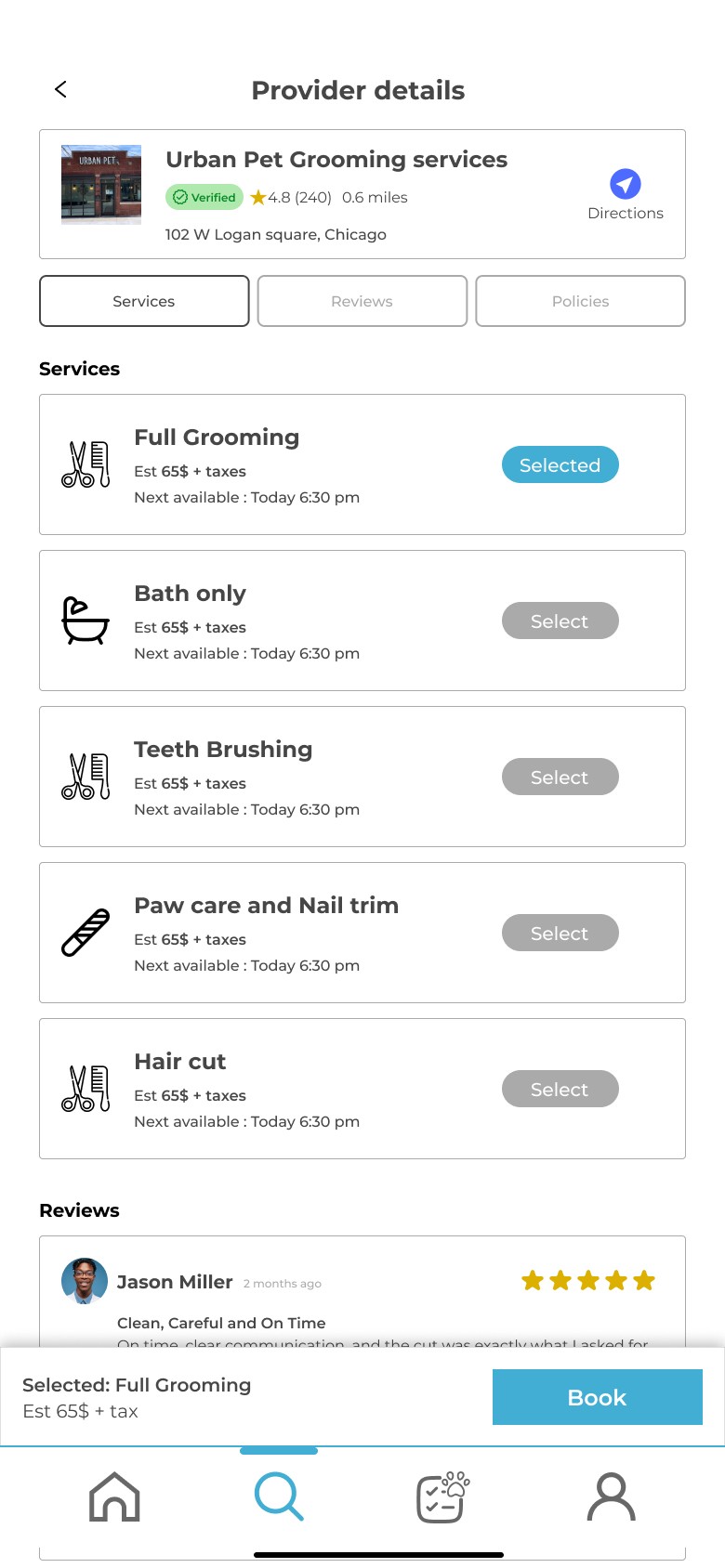
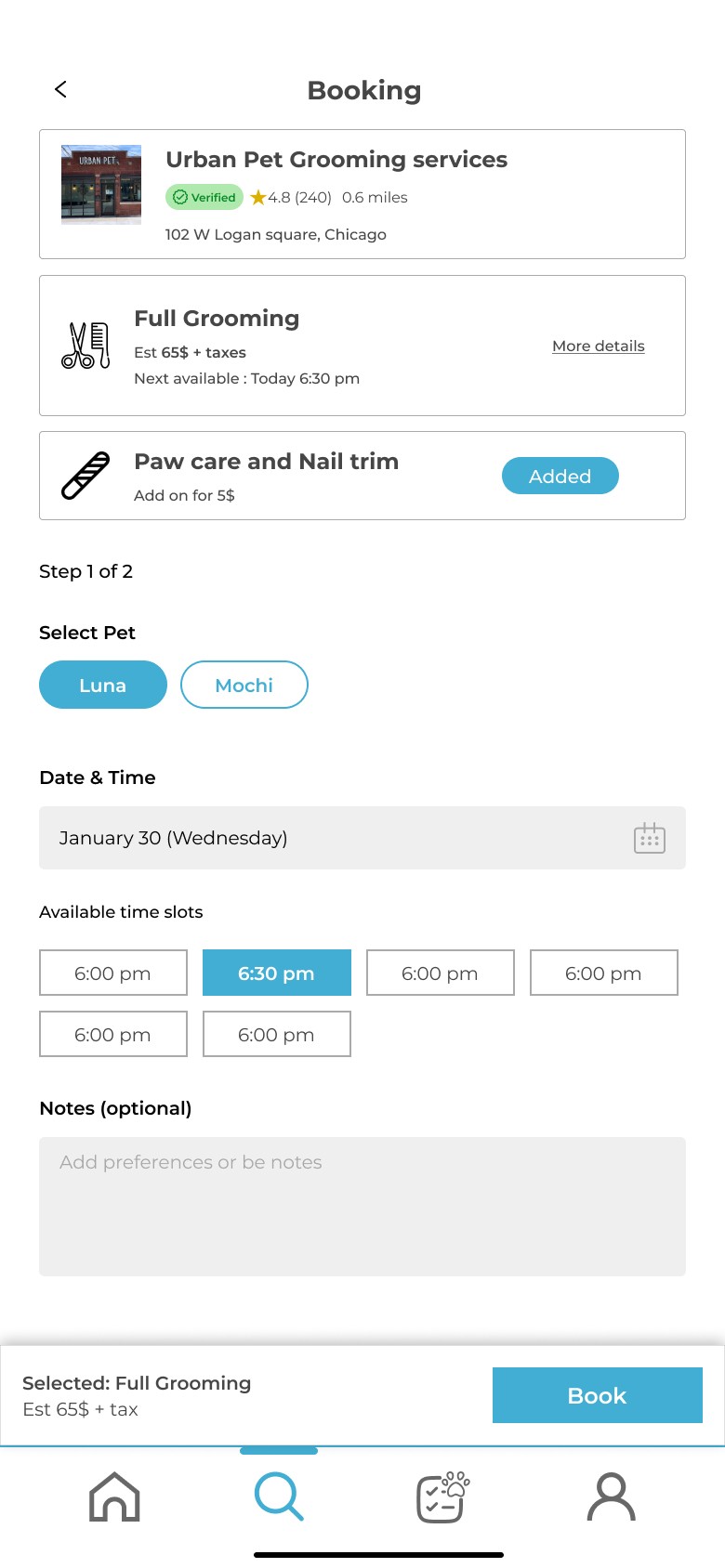
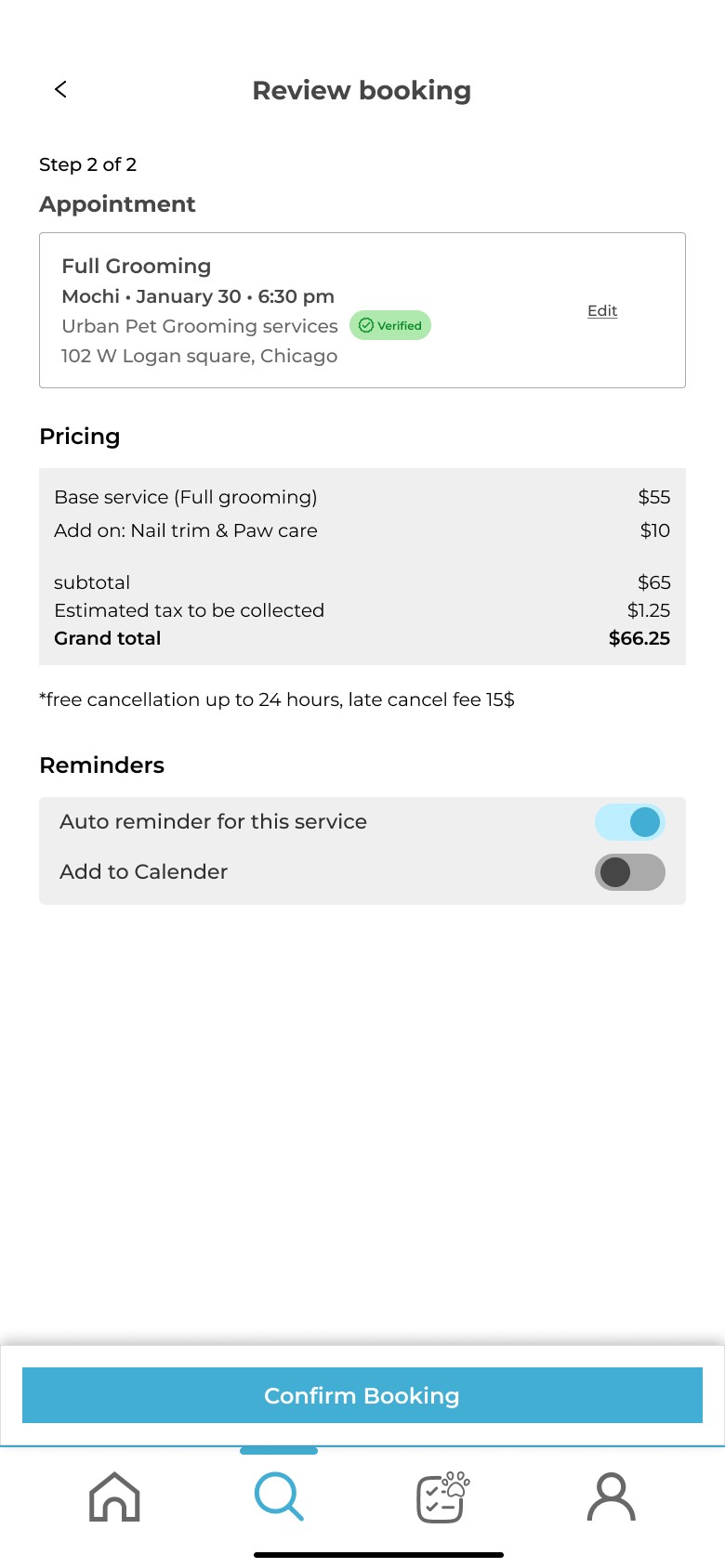
Search → Results → Provider → Booking → Price breakdown → Confirm
Trust: verified badge + reviews + policies
Pricing: upfront breakdown + add-ons + cancellation clarity
Speed: next slot + minimal steps + saved pet selection
◆ Prototype
Building & Testing
I validated Domigo through three rounds of testing (n=8 each) to ensure the experience solved the core problems: trust, pricing clarity, and reduced app switching.
Concept Testing
Validated “single hub” value
Trust + pricing were main concerns
Added Verified + Reviews/Policies, Price breakdown, All/Pet filter
Usability Testing (Hi-Fi)
Users completed Search → Booking → Price review
SUS 85 • NPS +62
Refined filters, CTAs, pricing labels
◆ Conclusion
Key Takeaways
Trust drives decisions: verification + reviews + policies matter most.
Transparent pricing reduces drop-off: “From” in results, breakdown before confirm.
Prioritization beats reminders: “Due soon” + “Next appointment” keeps users on track.
Multi-pet must be built-in: All pets + per-pet context prevents confusion.
Thankyou!
© 2025 Sainath Mailure
Always growing, always evolving, To be continued